
As everyone knows, on April 1, 2026, we’ll celebrate Apple’s 50th year. Apple has already begun these celebrations with various events. And starting today, throughout the year 2026, we too will set aside space on the Settings Blog pages for the important personalities who made Apple Apple. Our first guest is Avie Tevanian, who can be considered the father of macOS X.

Avadis (Avie) Tevanian is someone who worked together with Steve Jobs at NeXT Computer starting in 1988, and held the position of vice president responsible for software at Apple between 1997–2003. One of the biggest transformations Apple went through, the transition to UNIX-based MacOS X, was made during his era. Even more importantly, Avie Tevanian wrote the MACH operating system during his graduate education at Carnegie Mellon University. MACH is a microkernel architecture used in the writing of the XNU Kernel that forms the core of first the NeXT operating systems and, after 2001, the Apple operating systems. So yes, if you’re currently reading this article from your iPhone or your Mac, beneath it — and at its very deepest — lies Avie Tevanian’s signature.
The child of an Armenian family that immigrated to America in the early 1900s. The eldest of four brothers. He grew up on the east coast of the USA where his family settled and completed his university education on mathematics at the University of Rochester located in New York state. He was very interested in mathematics since his childhood years. This naturally directed him to the mathematics department when university time came. He actually made his choice thinking he preferred the Rochester Institute of Technology, which emphasizes the technology field, but he realized the name similarity afterward. He didn’t attach too much importance to this situation at the time.
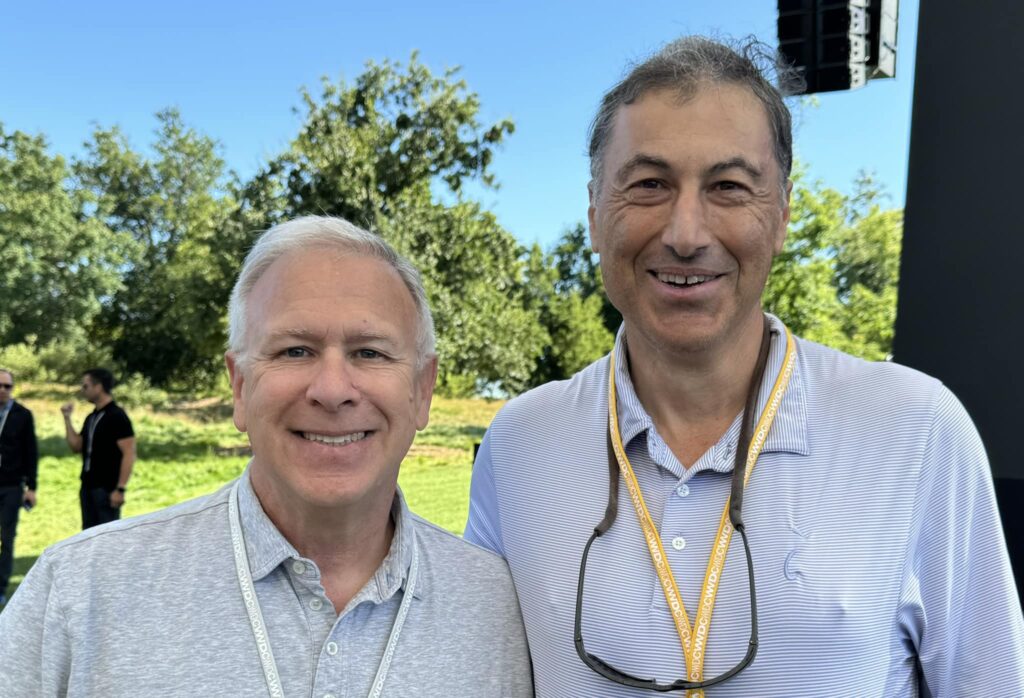
Although he studied in the mathematics department at university, he started to benefit from the school’s computer facilities. He actually found the opportunity to work with the Xerox Alto computers used for graduate students. He earned this right too by scraping at it with his nails. Although he spent all his free time at university on works related to the computer world, he was able to keep his classes in the mathematics department at a good level.
After university, he applied to MIT, Stanford, and Carnegie Mellon universities for his graduate education. He was accepted by all three, but began his graduate education at Carnegie Mellon University, which he believed would offer him the most opportunity. He wrote the Mach OS that has become identified with his own name during his graduate education under the guidance of Richard Rashid.
In 1987, he met Steve Jobs during the Berkeley UNIX conference. Steve Jobs made Tevanian the offer to join NeXT Computer. He wanted to use the Mach OS he wrote at NeXT. At that time, in addition to NeXT, which could be considered a small startup, Tevanian also met with Microsoft, which had become a Silicon Valley giant. He had a job interview with Bill Gates and Steve Ballmer from Microsoft. He notes that he enjoyed chatting with Steve Ballmer on the subjects of making a product sellable and managing sales channels. But at the end of the day, for reasons like Steve Jobs personally inviting him to NeXT and calling him personally several times, he preferred NeXT, a small firm of 70 people, over the software giant Microsoft.

During the NeXT years, he developed many of the technologies we use in Apple products today. The macOS and iOS operating systems, the Mail application, WebObjects, Objective-C, and many more products were developed based on NeXT products. In those years, NeXT was a firm oriented not toward the end-user market but toward the corporate market. Especially the higher-education market. On this subject they were in competition with Sun Microsystems.
The Apple Era
In 1996, while Apple was running on empty, it had entered a search for a new operating system with which it could make a fresh start. And they found the solution in buying NeXT. Contrary to general belief, Apple bought NeXT not just to bring Steve Jobs back, but for the technologies it possessed. NeXT had started using the microkernel-based Mach OS that Avie Tevanian developed in 1988, and Apple bought NeXT for the NextSTEP operating system, which was the developed version of Mach OS. Even just this last sentence shows how important Avie Tevanian is in terms of Apple history.
After the NeXT team joined Apple, Avie Tevanian oriented himself a bit more toward management duties. Many products Apple released in different product groups throughout the 90s, like Newton, QuickTake, and ImageWriter, were discontinued by management staff that Tevanian was also part of. The basic reason for this was to return Apple to its own main axis, the personal computer field.
As you can understand from what you’ve read above, Avie Tevanian is not a personality who was in the first staff that laid Apple’s foundations in the 70s. In this context, he shouldn’t be confused with names like Bill Atkinson or Andy Hertzfeld. In fact, he started using a Macintosh as his first personal computer during his university years. When asked why he preferred this device, he said “Apple was giving a student discount.” 🙂 But beneath the technologies Apple has developed from the early 2000s onward and that reach to today lie Avie Tevanian’s works.
You can watch the Avie Tevanian interviews prepared by the Computer History Museum within the scope of the Oral History series in two parts below (4 hours in total).
Leave a Reply