

Apple is ending the last crumbs of AFP support within macOS too with macOS 27 Golden Gate. If you entered the Apple world within the last 10 years, you may not have heard of the Apple Filing Protocol (AFP). Let me give a brief summary.

In the 90s and earlier, Macs used a network protocol named AppleTalk, an Apple innovation, instead of TCP/IP. Macs on AppleTalk networks used AFP (AppleTalk Filing Protocol) as the file-sharing protocol. I don’t think I need to say that sharing couldn’t be done with Windows devices.
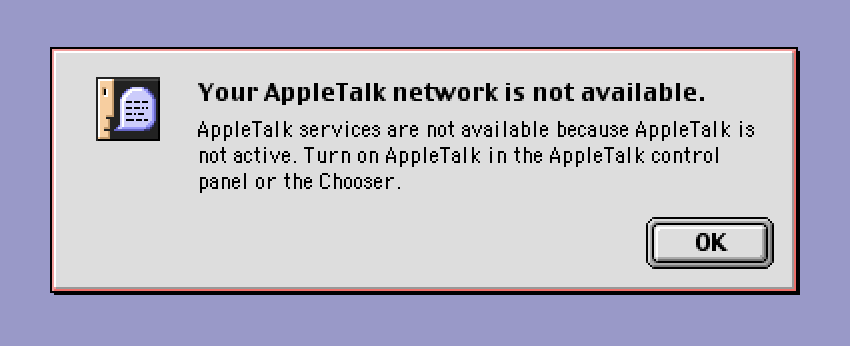
Toward the end of the 90s, Apple slowly began to move away from being a company that used closed-circuit systems and to become a company oriented toward following industry standards. This process especially gained speed with Apple’s acquisition of Steve Jobs‘s company NeXT in 1997. All of NeXT‘s technologies had also entered the Apple portfolio. Compared to Apple, NeXT was a company that followed industry standards more closely. The first Apple products developed in this direction also began to follow these standards more closely. We can count the iMac G3 as the first example of this.

As an extension of that period’s wave of innovations, TCP/IP began to be used instead of AppleTalk as the network protocol, and AFP was also developed to be able to run over TCP/IP. On PCs (that is, non-Apple computers), the SMB protocol was widely used. But Apple resisted switching to SMB. There were also justified reasons for this. Because AFP was used as a file-sharing protocol significantly faster than SMB. This speed difference continued until SMB3. This is actually the most important reason AFP was able to reach the present day.
In 2013, Apple announced with macOS 10.9 (Mavericks) that it was switching to SMB as the primary file-sharing protocol. In the following years — to give the exact date, in 2020 with the release of macOS Big Sur — the ability to use Macs as an AFP File Server was also ended. This was actually an extension of Apple ending its server product family.
What Is It That Will End with Golden Gate?
As I mentioned above, Apple began using SMB as the primary file-sharing protocol with Mavericks. But the AFP Client also continued to keep its place within macOS. This was especially important so that old Macs and new Macs could exchange files retroactively.
With Golden Gate, the AFP Client feature is also being removed from within macOS. Time Machine, the last system feature that allowed the AFP file-sharing protocol to reach the present day, is also cutting its backward support with macOS 27 Golden Gate. In this context, with macOS 27 you will not be able to back up to the Time Capsule devices you have. And in addition to this, if you use your Mac as a Time Machine Server, devices running pre-Big Sur systems will not be able to see computers with macOS 27 installed as a Time Machine backup destination.
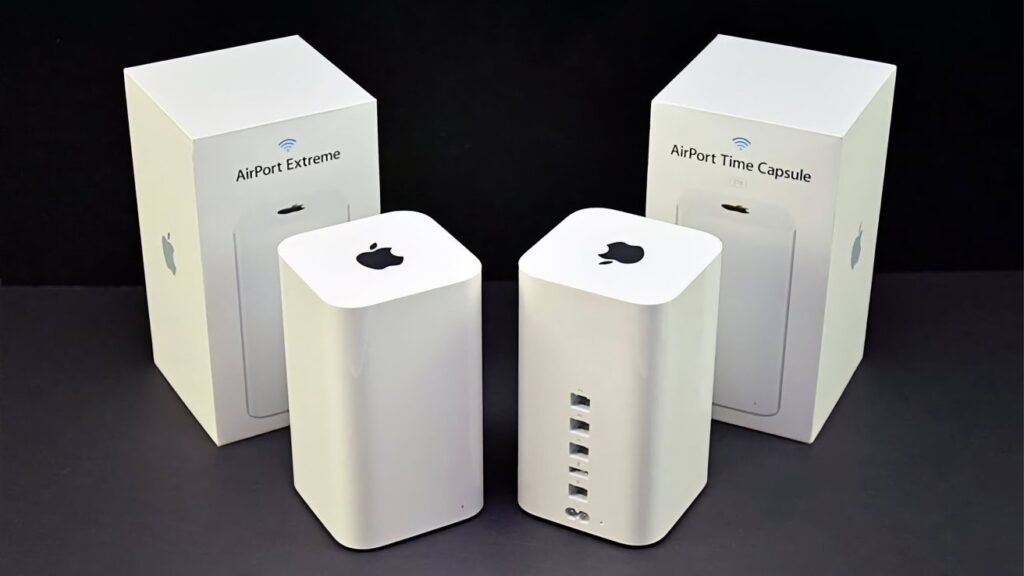
Apple had announced the information that AFP would end among the changes in Sequoia, saying “in a future macOS version, the client will also be removed.” And that version turned out to be Golden Gate.
You can find a small note on the subject in Apple’s this article.
Leave a Reply